Wednesday, April 3, 2013

April 3 - Memory of the Graves


Poetry follows the conservation of energy as much as anything else. An undergrad professor once told our class that she had learned Italian specifically to read Dante in the original. Speaking only one language myself, the idea of this has always entranced me. Considering the fact that poetry often challenges native speakers with its language, fluency at that level requires considerable work. I’ve taught poems in ESL classes before, like William Stafford's Travelling Through the Dark, with mixed results.

Why does Teacher Kevin want to kill deer?

More so than any other art form, translation must inherently change the original in some way to mold it into a new set of grammar, idioms and connotations. Considering how much Korea has been in the news, I figured some Korean poetry would be nice today (I’ve kinda given up on only using Americans. I like a good mix.)

Anyway, Korean poetry can be exceedingly difficult to translate into English. The languages have little in common, unlike English with Romance or Germanic languages. Even spelling can cause trouble. “Cheju Island,” for example, is more commonly spelled Jeju now.


To return to the transmutation of poetry once again, reading foreign language poetry can sometimes open new corridors into our understanding and use of our own language. Perhaps, this it what happens to the original rhythm and other energies of the poem. Rather than simply vanishing, what is lost in translation is really recycled into something else. It’s a double-edged sword, but danger is important.


Rather than go on much more about a subject I have little formal study in, I think I’ll just put a poem here. This is Memory of the Graves by Ko Eun...who you can Google to find out biographical info on. He’s really interesting, but his life is not currently required. It’s a constant struggle to decide how much contextualization I should include with each poem. For this one, you aren’t getting much. Translated by David R. McCann.


Memory of the Graves

As a youth I was obsessed with graves.
There are six-hundred-and-eighty-nine
mounds in Hwandung Cemetery.
At Sarabong graveyard on Cheju Island
I would on the way every night
to sleep by the graveside.
Word spread that I was a ghost
residing in that cemetery.

A lucky day it was
when someone died and his grave was dug.
I would say with joy,
So, you have come here at last?
What can be a better place
to come to than this one?

At day’s end once
drunk as could be I fell asleep
somewhere among the graves
and was stung by a scorpion.
For a week I wore a piece of pumpkin
bandaged to my cheek,
all swollen, in deadly pain.
And again, as a novice monk
on my way to Marae Temple
in T’onggyong, I once spent half a day
in a graveyard, forgetting
the errand for my master,
a lapse that cost me dear.

A few decades drifted past
until I came to realize
wild animals have no graves!
Animals are better than man;
they are superior to God!
They do not leave their graves behind.
They are far better than myself.
Have I been infatuated, crying and weeping
over graves, in order to awaken
to this simple truth?

Tuesday, April 2, 2013

April 2 - The Great Poet Returns


Mark Strand was actually born in Canada, on Prince Edward Island, though he has spent most of his adult life teaching in American universities. Yes, he is still alive. In fact, he is widely regarded as one of the premier American poets, having won enough awards to allow for such a subjective claim. Oh, and it’s Canada’s National Poetry Month in April, too (representin’ for my northern brethren). Anyway, I’m more interested in talking about Strand’s poem:


The Great Poet Returns


When the light poured down through a hole in the clouds,

We knew the great poet was going to show. And he did.

A limousine with all white tires and stained-glass windows

Dropped him off. And then, with a clear and soundless fluency,

He strode into the hall. There was a hush. His wings were big.

The cut of his suit, the width of his tie, were out of date.

When he spoke, the air seemed whitened by imagined cries.

The worm of desire bore into the heart of everyone there.

There were tears in their eyes. The great one was better than ever.

“No need to rush,” he said at the close of the reading, “the end

Of the world is only the end of the world as you know it.”

How like him, everyone thought. Then he was gone,

And the world was a blank. It was cold and the air was still.

Tell me, you people out there, what is poetry anyway?

Can anyone die without even a little?


OK, I admit I also chose this because yesterday was Easter (and Cesar Chavez Day, but I’ll get to that later). Also, I’m doing my own interpretations here based solely on the poem itself, to the exclusion of any biographic or other supplemental information I may have access to.

The Great Poet character in this poem is rife with Judaeo-Christian associations to a divine being. He has “big wings,” generally denoting an angel, and his limo as white tires and, absurdly, stained-glass windows. He also appears with a beam of light from the heavens and “whitened” the air when he spoke. Put that with the poem’s title, and he could be a Jesus figure as well.

It wasn't until Jesus made partner that the whole shamrock metaphor really came together.

Now, imagine this in your head: what color is the Great Poet’s suit? His limo? It doesn’t explicitly say, but I had to check the text again to make sure they weren’t white. My own image of the poet at first was white suit, white ride, good guy. Surprise, surprise, I want to side with the poet. But I look at him some more and I get suspicious.

For one, I imagined the limo coming out of the clouds in the beam of light, but the text doesn’t support that. The images and language used have a way of providing us with a detail here and there, while we tend to fill in the other, less-descriptive language, with our own assumptions. “Coincidentally,” this always ends up making the Great Poet look better. Now that I’m paying attention to this, the Great Poet appears more like a Jerry Falwell character, and I would not buy a ticket to that reading (although I’m always tempted by free wine).

Here’s another detail: The narrator starts out as one of the crowd, “we knew the great poet was going to show,” but abruptly separates himself by saying “There were tears in their eyes” rather than “our” eyes. Why? Has the narrator realized something? Why aren’t there tears in his eyes as well? (Also, I’m just using AP style for my pronouns here, so hush). The narrator stays in a role of commentator rather than active participant from then on, even giving his own thoughts for the final two lines.

He's fine so long as you keep his headset on him.

OK, this is getting a bit long so let me try and get this straight: Great poet is kind of a fraud, the audience is oblivious (aside from the narrator), he tells them to not worry about the end of the world; i.e., death, because it is only the beginning of something else (possibly, but not necessarily, heaven).

The crowd seems to take this heart, or at least the “worm of desire,” which reminds me of the snake in Eden, has bored into their hearts. By the way, if the worm is the snake and the snake is the gateway to the Tree of Knowledge/Sin, then the poet is telling the crowd to stay ignorant and blissful, right?
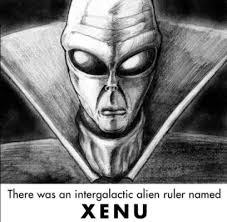
I hear a knock at the door.


Upon his departure, the world is at once “blank.” This negative and positive to this. A clean slate always seems like a great way to improve your life mid-way through (ask Catwoman), but erasing all context/past means we lose what made us who we are in the first place. There’s no warmth, no wind. The world is stagnant and sterile.

Oh, to allow for a rebirth of originality! Except it would be a lie, considering my knowledge of the past does not dictate what actually happened, or does it?That leads to the final lines of this poem. The poet wants to leave us with answers, but the narrator forces us to end with questions. Is it better to believe and be saved/lost? What about aware and miserable? “What is poetry anyway?” Given the constant religious language associated with the poet and his reading, isn’t poetry just another form of religion? (Albeit, one a bit more flexible and evolving.) Why does the poet whiten the air and leave the world blank?

“Can anyone die without even a little?” Without, what, reading Dante? I’m sure plenty have. Actually, this line flips the expected language. People usually refer to art in general as a way of living, not dying. Can anyone live without even a little seems the usual sentiment. How can poetry help me die? Perhaps life is just building exhibits to display in your own presidential library, or Facebook. Hmmm...this may be something you should answer for yourself. Thanks for reading. Apologies for typos I missed.

UPDATE: I'ma quote something Jenny Liou wrote on Facebook cuz my response got too long for a comment. (sorry for truncating)

""Actually, this line flips the expected language. People usually refer to art in general as a way of living, not dying." Really? But what about Montaigne (following Cicero): "to philosophize is to learn how to die"? Or (joining the 20th century, if not the 21st) Robert Penn Warren's "Bearded Oaks"?

That's a really good point. Oh dag, that coincides nicely with the Great Poet's quote in the poem. "No need to rush...the end of the world is only the end of the world as you know it." By which I mean to say that the Great Poet remains a suspicious figure in the poem. His sermon to the peoples provides them with a false sense of security. "How like him" they think as he thoroughly meets their expectations. His philosophy leaves the people alone in a chill wind without helping them to deal with it.

Now I'm looking at all that white the Great Poet creates and getting a feeling of death, an entropic wind, even. The people are stuck under the clouds just like they were before, right? The Great Poet offers stability, security, comfort. He whites out the conflict that, as a vaccine gives us strength through attack, allows people to grow. Is he giving the people what they want (a philosophy of life) when he ought to be giving them what they need (philosophy of death). He'd make a terrible Batman.

Monday, April 1, 2013

April 1 - Casey at the Bat


Since the beginning of National Poetry Month coincides with opening day this year as well as April Fool’s, a poem by the little-known Ernest Lawrence Thayer seems appropriate. You probably haven’t heard of this writer, but you have most likely heard the poem.

It's been recreated in a famous Disney cartoon, recited by James Earl Jones, and even performed by Penn & Teller (Teller escapes from being hung upside-down in a straight jacket before Penn can finish the poem).

Casey at the Bat: A Ballad of the Republic Sung in the Year 1888, is one of the few poems to remain popular in American mainstream culture throughout the modern era. 

De Wolf Hopper, a popular comedian of the time, gave the first public performance of the work in August 1888, a few months after its publication. From there the poem gained immediate and lasting popularity, becoming eventually, as said by Baseball Almanac, “the single most famous baseball poem ever written.” 

One of the major themes of this poem, and one it shares with the sport of baseball, is the community of loss. The poem is told through an omniscient third-person narrator and presents only a few characters: the umpire, the pitcher, the few players preceding Casey in the line-up, Casey himself, and the crowd. 

Throughout the poem, we are privy to the inner thoughts of the mob in the stands while the narrator gives a dramatic play-by-play, uniting the reader with the fans. This culminates in Casey’s eventual strikeout, in which we all feel the excitement and expectation of the crowd, whiffed out of existence by Casey’s failure to connect, his fall from baseball demi-god to fallible human.

Couple notes: Mudville may or may not be based on an actual town. There are arguments that it may be Stockton, California, or Holliston, Massachusetts, though I feel it is a bit like the Anywheres-ville nature of the town of Springfield in The Simpsons. Also, Casey may not be based off any actual player, but if he were, it would most likely be Hall-of-Famer Mike “King” Kelly.

Despite the addition of some lines, I’m going to present this poem in its cartoon version. That’s how I first encountered it, and that’s likely how I’ll always remember it. If you don’t have ten minutes to watch a video, you can read the poem and find out more from the Baseball Almanac, and I highly recommend listening to Darth Vader recite it, too.

Sunday, September 16, 2012

On the Trail

Twenty nights of my lonesome, twenty times I’ve listed my fires
by giving heed to all that surrounds.

A fire is ever changing and cannot be bound to uniqueness
without jack rabbit pellets, empty cacti, mice hoarding for home.

Despite all the mountains I have staggered footprints upon, I’ve read
the Earth is smooth in scale, with a finish finer than an 8-ball of equal size.

My struggles and fires, camps and correspondence, they summit
no great peaks. No Atlas hefts the weight of my life atop his shoulders.

Or, if he does, it garners no notice, for his part.
I believe in fire.

I mourn the stars that have already collapsed; their final shimmers
of death stretch for light years across the moonless Mojave.

I will not cry out for the world any longer, for my words and life
are ever changing. Better to be a fire, better to drift up into the night

fulfilling no more purpose than the Colorado River
or the great boulders of Southern California.

Sunday, May 27, 2012

The Wanderer

I saw a shadow-stretched spider in the laundry room
scuttling its drinking straw legs 
across the single lane of light from the hall,
so I began hopping in place and shaking my hands
as though drying my nails,
and had a fit of laughter

before I walked across the threshold
barefoot, wary, and grinning.

Thursday, April 26, 2012

Creation

There is a certain amount of fear about committing oneself to the art you create. Will all that I have put of myself into this work lessen me? Honesty is not the point, the danger is in a thorough effort, an enervating amount. You never completely recuperate. But you are always dying anyway, why not add what you have to the world? Why is it so hard to accept the paradox that sacrifice will give you life as well? Trepidation. Ambiguity. All we read of Kafka he willed be destroyed, a kind of life I can't yet grasp.

Tuesday, April 3, 2012

Where Are You?

-for my friend
You are always smashing through glass doors
(soft tissues sliding open, dropping little red teeth),
through store windows, satellite mirrors, empty bottles,
that the events fuse, and the glass splashes
out like weather vanes or planets
spinning where day and night garble
to a star’s light refracting the broken pieces
, 
each observable only in echo,
a tidal bore of broken sunrises,
illuminating the expansion of your dust cloud body
as though what shines 

were key to where you are.